


Mortar Mixer: Consistent Mortar and Plaster Directly at the Point of Use
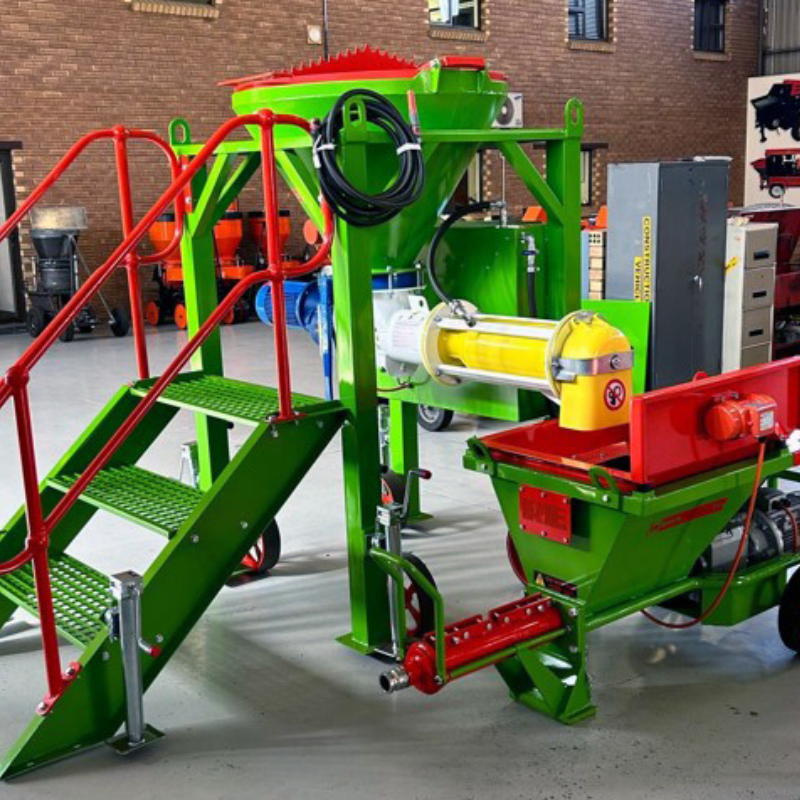
A mortar mixer must do more than combine dry material and water. On a building site, it has to provide a stable, repeatable mix while coping with changing working conditions, short production stops, frequent cleaning and the need to move equipment quickly. When consistency is lost, application quality can vary, material can be wasted and the downstream work rate can slow down. For dry premixed mortar or plaster, a continuous mixer offers a direct response to these operational issues: the dry product is fed into a dedicated mixing zone, water is introduced in a controlled manner and ready-to-use material is produced continuously at the point of application.
MAP, the industrial mixing specialist within WAMGROUP, developed the WETMIX range for this purpose. The system is designed as a modular building-site mortar mixer for dry premixed products. Depending on the chosen configuration, it can be supplied from a silo or hopper, or manually from bags. The objective is straightforward: maintain a reliable flow of mortar or plaster, reduce interruptions and make daily handling practical for the operator.
How a continuous mortar mixer works
In a silo-fed installation, dry premixed material enters the mixer by gravity and is transferred by a feeder screw towards the mixing zone. Water is added in this zone, where the rotor and mixing tools rapidly distribute the liquid through the dry ingredients. The resulting wet mortar or plaster leaves the machine ready for application. Because feeding and mixing take place continuously, output is not organised as a sequence of separate batches. This supports a steady work rhythm and helps avoid repeated manual dosing operations.
The same principle can be adapted to bag-fed work. A mortar mixer with a bag feeding hopper is useful where no silo is available, where the site consumes smaller quantities or where the mixer must be moved between work areas. In both cases, the key engineering requirement is controlled interaction between dry-product flow, water addition and mixing intensity. If one of these variables is unstable, the final consistency changes. Correct equipment selection and setup are therefore as important as the mixer itself.
Why mixing chamber design matters
Mortar and plaster are abrasive enough to make wear a central design consideration. At the same time, the machine must remain light enough for practical site handling. WETMIX V05 addresses this balance through a mixing chamber and rotor shaft manufactured from non-stick, anti-wear SINT engineering polymer. The chamber is externally reinforced by four carbon-steel bars. This construction combines structural support with a lower overall weight than a conventional all-steel solution.
The non-stick character of the material also supports cleaning. Residual wet product can harden quickly if left inside a mortar mixer, increasing start-up resistance and making maintenance more difficult. The WETMIX V05 design allows daily internal washing in less than two minutes by pressing a button. Fast cleaning is not merely a convenience: it helps preserve mixing geometry, reduces the risk of material build-up and supports a more predictable start at the next work cycle.
Technical overview of WETMIX V05
| Parameter | WETMIX V05 specification |
|---|---|
| Operating mode | Continuous building-site mixing |
| Suitable materials | Dry premixed mortar and plaster |
| Feeding arrangement | Gravity flood-fed from a silo or hopper |
| Mixing chamber | Non-stick, anti-wear SINT engineering polymer |
| Rotor shaft | SINT engineering polymer with modular, individually replaceable mixing tools |
| Nominal capacity range | 40-100 litres per minute |
| Available configurations | Two lengths and three mixing capacities |
| Cleaning | Daily internal washing in less than two minutes |
| Handling | Mixer separates into three sections that can be handled by one person |
The modular rotor shaft allows individual mixing tools to be replaced rather than requiring replacement of a complete assembly. This is relevant when processing products with different rheological behaviour, aggregate characteristics or water demand. A wide range of mixing tools is available so that the mixing action can be adapted to the material and the required output.
Choosing between silo-fed and bag-fed mortar mixers
A silo-fed mortar mixer is generally the logical choice when dry premixed material is stored in bulk and a continuous, high-utilisation work sequence is required. The mixer is positioned beneath the silo or hopper, minimising manual handling and creating a direct path from storage to wet preparation. This configuration can improve housekeeping because bags do not have to be opened continuously in the working area.
A bag-fed model is more suitable when site logistics are temporary, the material is delivered in bags, or output requirements do not justify a dedicated silo. The bag feeding hopper gives the operator a controlled receiving point for the dry product while retaining the advantages of continuous wet mixing. Selection should consider expected consumption, required mobility, available water supply, electrical connections, material type and the distance between the mixer and the application point.
Integration with the wider dry-mix process
The mortar mixer is one element in a broader material-handling chain. A silo installation may also require filling equipment, level monitoring, dust filtration, flow-aid devices, intercepting valves and a feeder. These components influence continuity just as directly as the mixing chamber. For example, poor material discharge from the silo can cause a shortage at the feeder, while uncontrolled water pressure can alter mortar consistency. A coordinated system approach therefore reduces interface risks and makes commissioning more predictable.
WAMGROUP develops equipment across bulk solids handling, flow control, dust filtration and industrial mixing. This enables the mortar-mixing stage to be considered together with upstream storage and feeding requirements rather than as an isolated machine. The practical benefit is clearer responsibility for component interfaces and a more coherent plant layout.
Operational benefits for construction sites
Continuous preparation can reduce waiting between batches and provide mortar or plaster only when required. This helps limit the quantity of wet material left unused during interruptions. Consistent mechanical mixing also reduces dependence on manual technique, supporting repeatability between operators and work shifts. Lightweight modular construction simplifies relocation, while quick cleaning and individually replaceable mixing tools support routine maintenance.
The most important benefit, however, is process stability. A mortar mixer should deliver the same usable consistency throughout the working process. Stable output helps applicators maintain a uniform pace and reduces corrective adjustments downstream. For contractors and dry-mix producers, this translates into better control of material performance at the final point of use.
Technical FAQs about mortar mixers
What is the difference between a mortar mixer and a concrete mixer?
A mortar mixer is optimised for mortar, plaster and similar dry premixed building materials. A concrete mixer generally handles mixtures containing larger aggregates. The required mixing tools, wear protection and discharge behaviour are therefore different.
Can a continuous mortar mixer be installed beneath a silo?
Yes. WETMIX V05 is gravity flood-fed from a silo or hopper. Dry material is transferred by a feeder screw into the mixing zone, where water is added.
What output can WETMIX V05 provide?
The published capacity range is 40 to 100 litres per minute, with two machine lengths and three mixing capacities available.
How long does routine cleaning take?
The interior of the mixer can be washed daily in less than two minutes by pressing a button, provided the installation is correctly connected and operated.
Can one operator move or service the mixer?
The mixer separates into three sections designed to be handled by one person. Site lifting and safety procedures must still be followed.
When is a bag-fed mortar mixer preferable?
It is particularly useful on temporary or smaller sites, where material arrives in bags or where a bulk silo is not practical.
A practical route to consistent mortar preparation
Selecting a mortar mixer is ultimately a process decision. The correct solution must match the dry premix, water demand, expected output, storage method and site layout. WETMIX combines continuous operation, wear-resistant polymer components, modular mixing tools and fast cleaning in a compact building-site system. With silo-fed and bag-fed configurations available, the technology can support both structured bulk installations and more flexible site operations.
Explore WAMGROUP mortar-mixing solutions and contact the local specialist to identify the most suitable configuration for your application.


